Crane rail measurements: geometry tested to ISO 12488-1
Accurate verification of gauge, alignment, elevation and local slope of crane rails, worked up in our own software, CalibrationMate.
Project
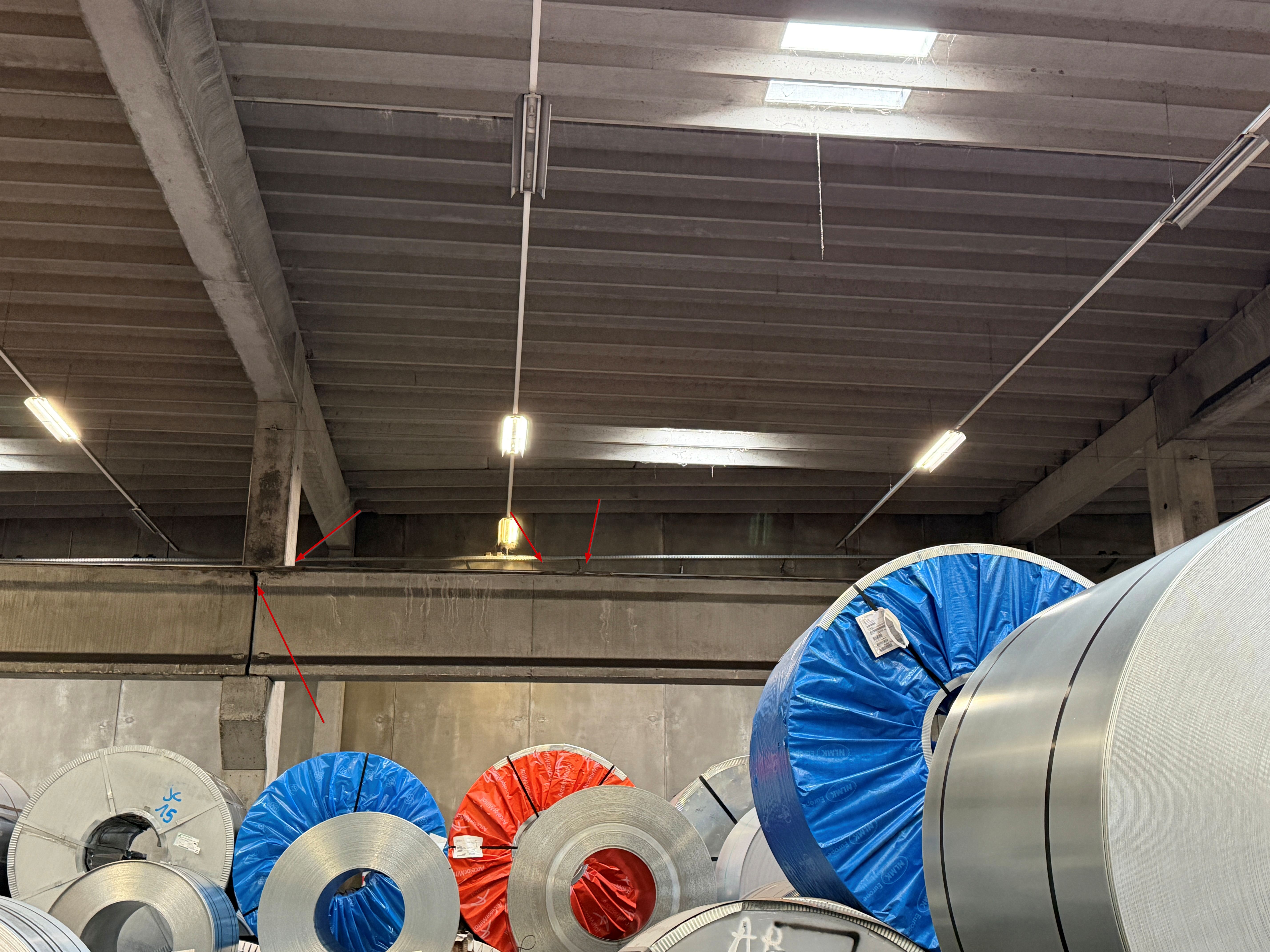
A crane runway can appear straight while its gauge, lateral position or elevation is outside tolerance. These deviations cause additional wear, skewing and increased loads on the crane and rail structure. Working the results up afterwards is also laborious: transferring data, building graphs and checking deviations by hand takes time and is prone to transcription errors.
Approach
De Groot GeoServices surveys both rails at fixed stations. To make that processing reliable and repeatable, we built our own software for it, in collaboration with our client: CalibrationMate. The measurement data is imported directly, after which the application calculates gauge, lateral displacement, rail elevation, local slope and the elevation difference between the two rails, checks them against ISO 12488-1 class 2, and places a situation sketch of the runway on an aerial photo. From that same source CalibrationMate generates the report with tables, graphs and highlighted tolerance exceedances; the surveyor performs the final check before it goes to the client.
Result
Because we keep both the survey and the processing in-house, the client receives a consistent, reproducible survey report with clearly highlighted exceedances, without the delay and transcription errors of manually assembled reports. Maintenance, alignment and corrective work can be prepared precisely without reassessing the entire runway, and because every survey follows the same structure, follow-up surveys are directly comparable.
Related services
Crane Rail Surveys
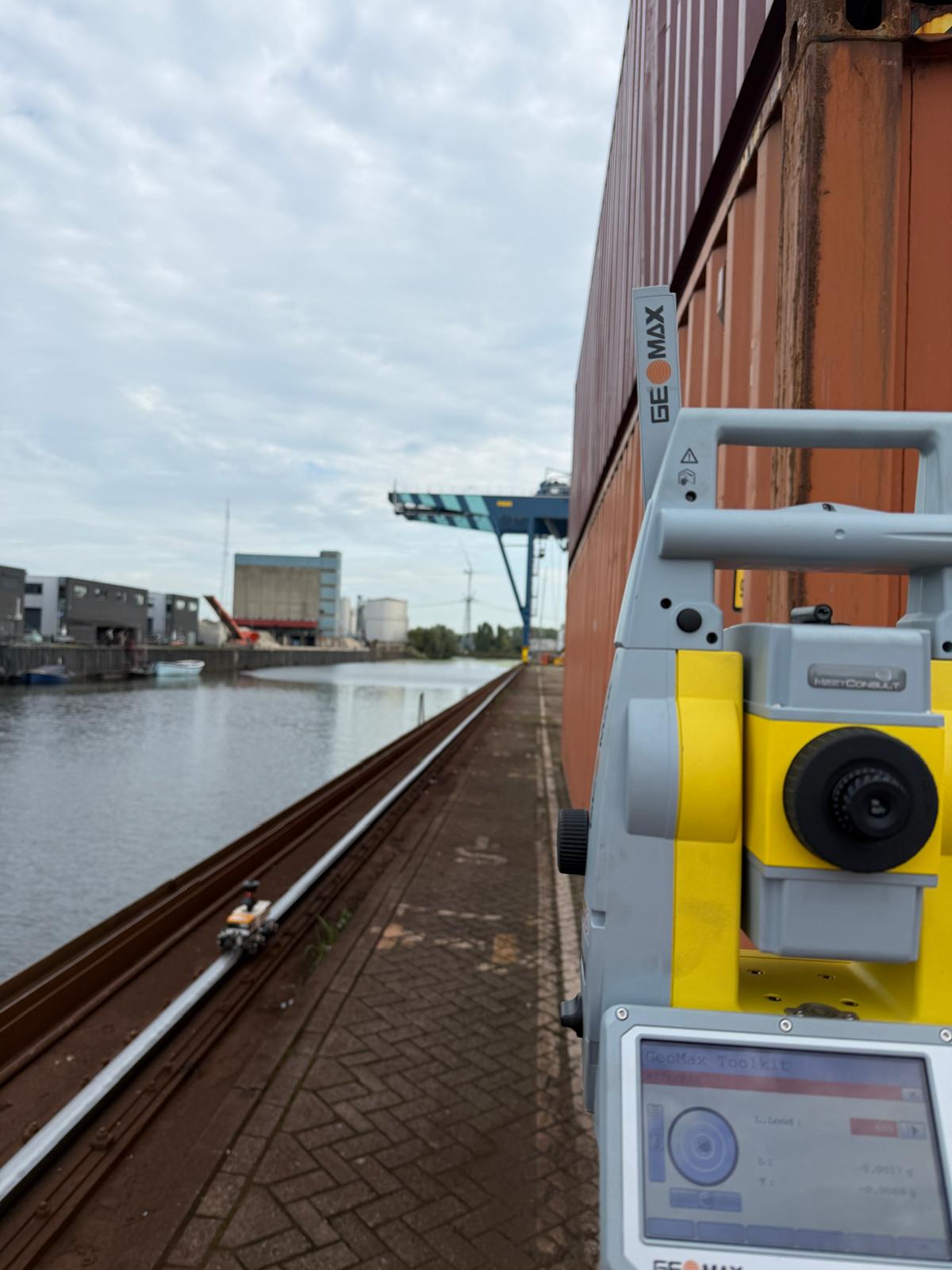
We survey crane rails to the ISO standard, using a robotic total station and a measuring trolley. Our own software turns every survey into a standard, checked report.
Lees verder →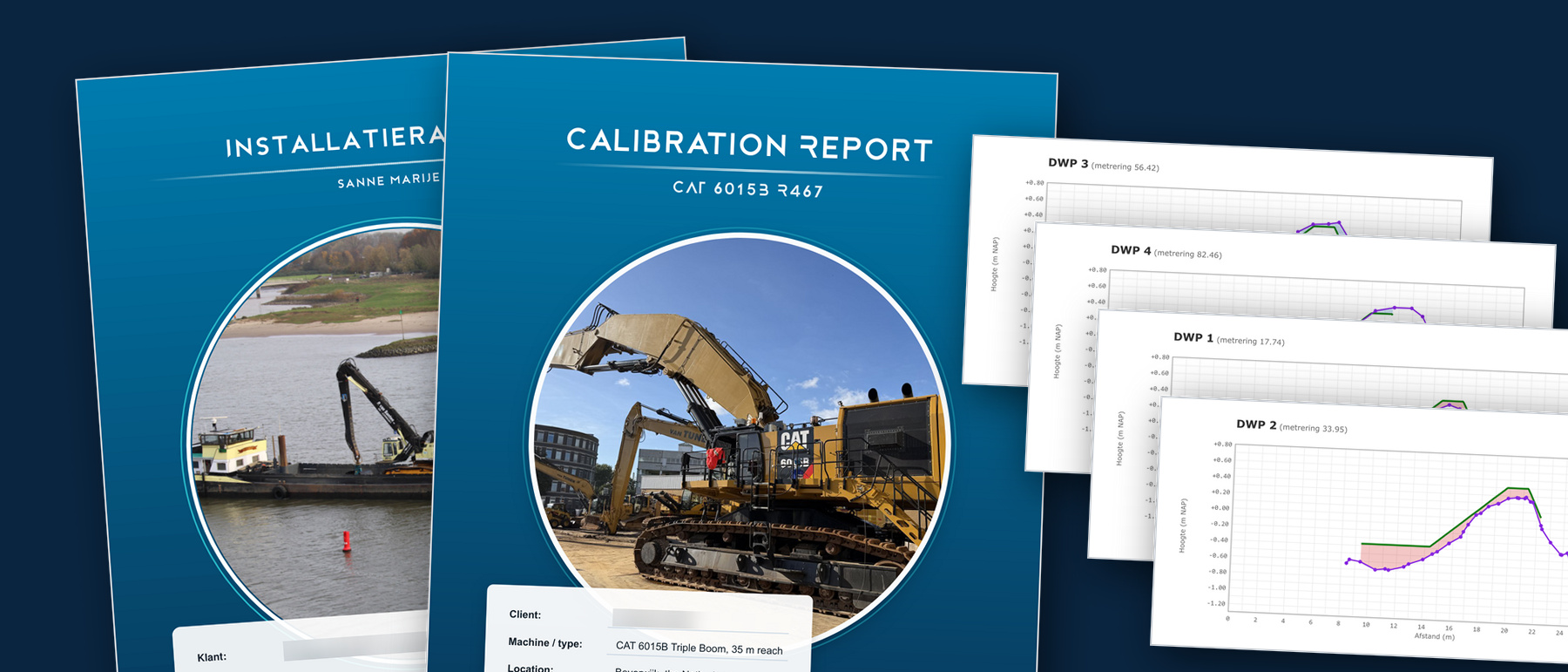
Data, software & reporting
From raw survey data to usable results. We work in the package you know, and where none exists we build the tool ourselves.
Lees verder →
Consulting
Strategic consulting to take your projects to the next level.
Lees verder →